 TheBusyFeeder
Bird food guide: what to feed backyard birds
Start with a bird group or the feeder you own. These food relationships help you choose what to offer; they do not promise which birds will arrive.
Familiar birds and foods to offer.
Start with birds that live in your area, then choose a food and feeder that suit them.
Northern Cardinal
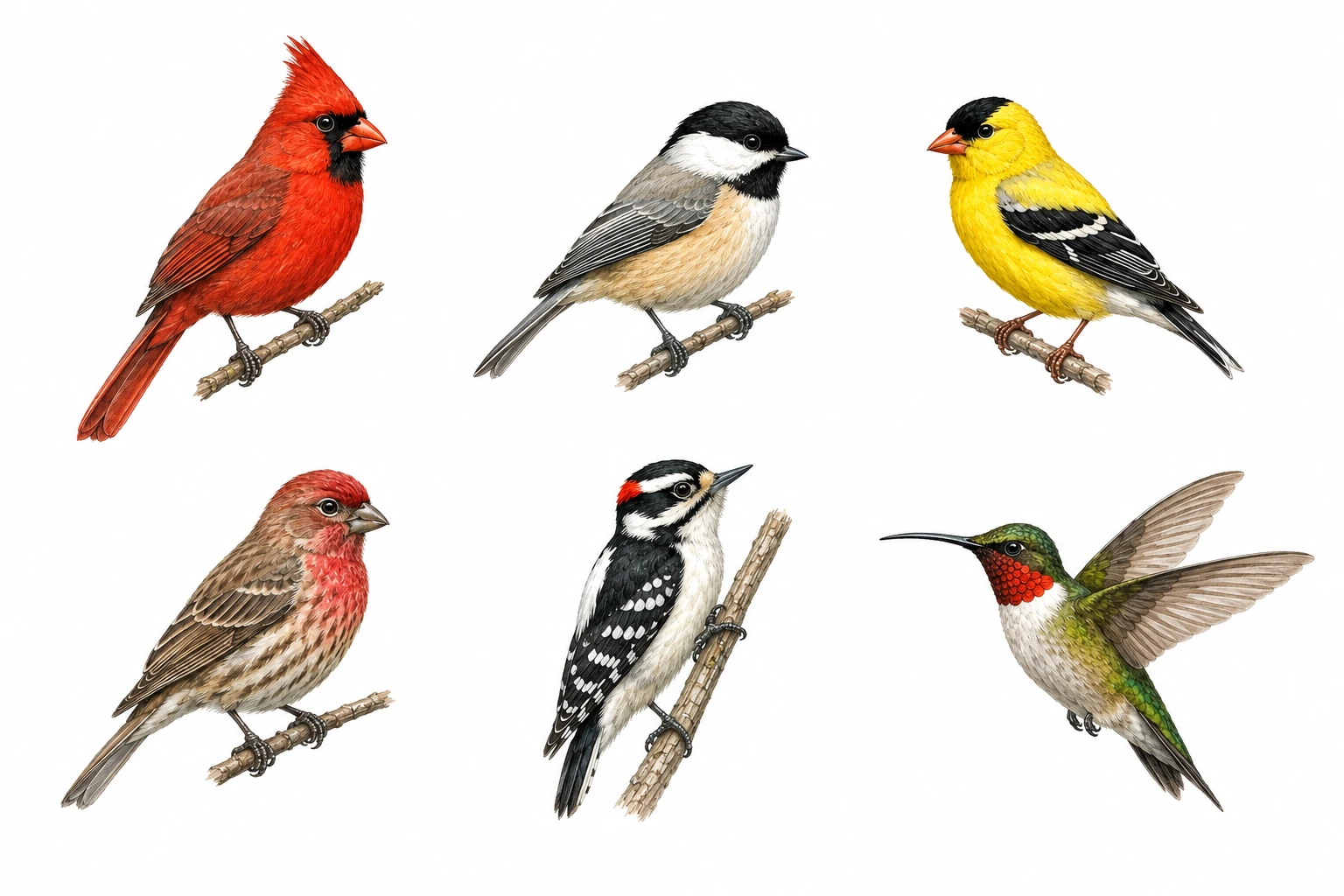
Black-oil sunflower, hulled sunflower, safflower.
Common in eastern and central North America; confirm local presence.
Black-capped Chickadee
Black-oil sunflower, suet, peanuts.
American Goldfinch
Nyjer, black-oil sunflower, hulled sunflower.
House Finch
Black-oil sunflower, hulled sunflower, safflower.
Downy Woodpecker
Suet, peanuts, black-oil sunflower.
Ruby-throated Hummingbird
Clear sugar water: 4 parts water to 1 part refined white sugar by volume. No red dye.
Eastern breeding species and migrant; winter examples here cover the Southeast only.
Illustrations. Food choices do not guarantee a visit. Check local presence and seasonal advice in Project FeederWatch’s bird guide.
Match food to my feeder →Match a feeder, food, and bird group
Use the bird group as a starting point
Cornell’s Project FeederWatch explains which foods and feeder styles attract different birds. Choose a group to explore examples, then check the individual birds listed: even birds in the same family can prefer different foods.
Check your feeder’s port size and food instructions as well. A food that suits a bird may still block or spill from the wrong feeder. Keep offered food dry and remove spoiled leftovers.
A winter region is not a year-round prediction
The regional examples follow FeederWatch’s winter observations. For summer visitors or a bird’s full range, use the linked bird guide. If you are unsure which winter region fits your location, leave the region blank and browse by food or bird group.
Check your state wildlife agency for bear guidance and local advisories before putting food out. In some places or seasons, removing feeders is the right choice.